Matriarchal Legacy: Making Hemp by HMong Women
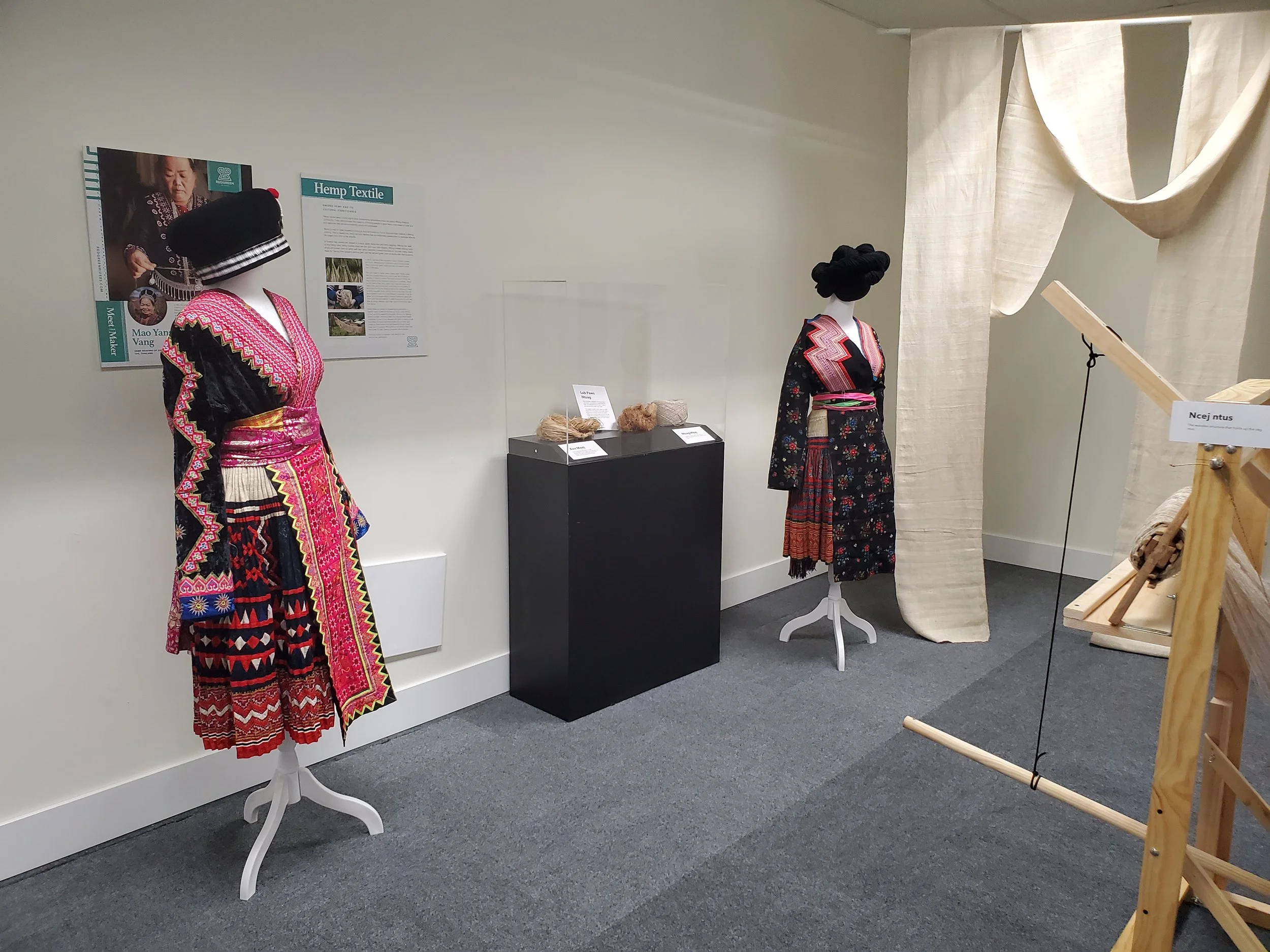
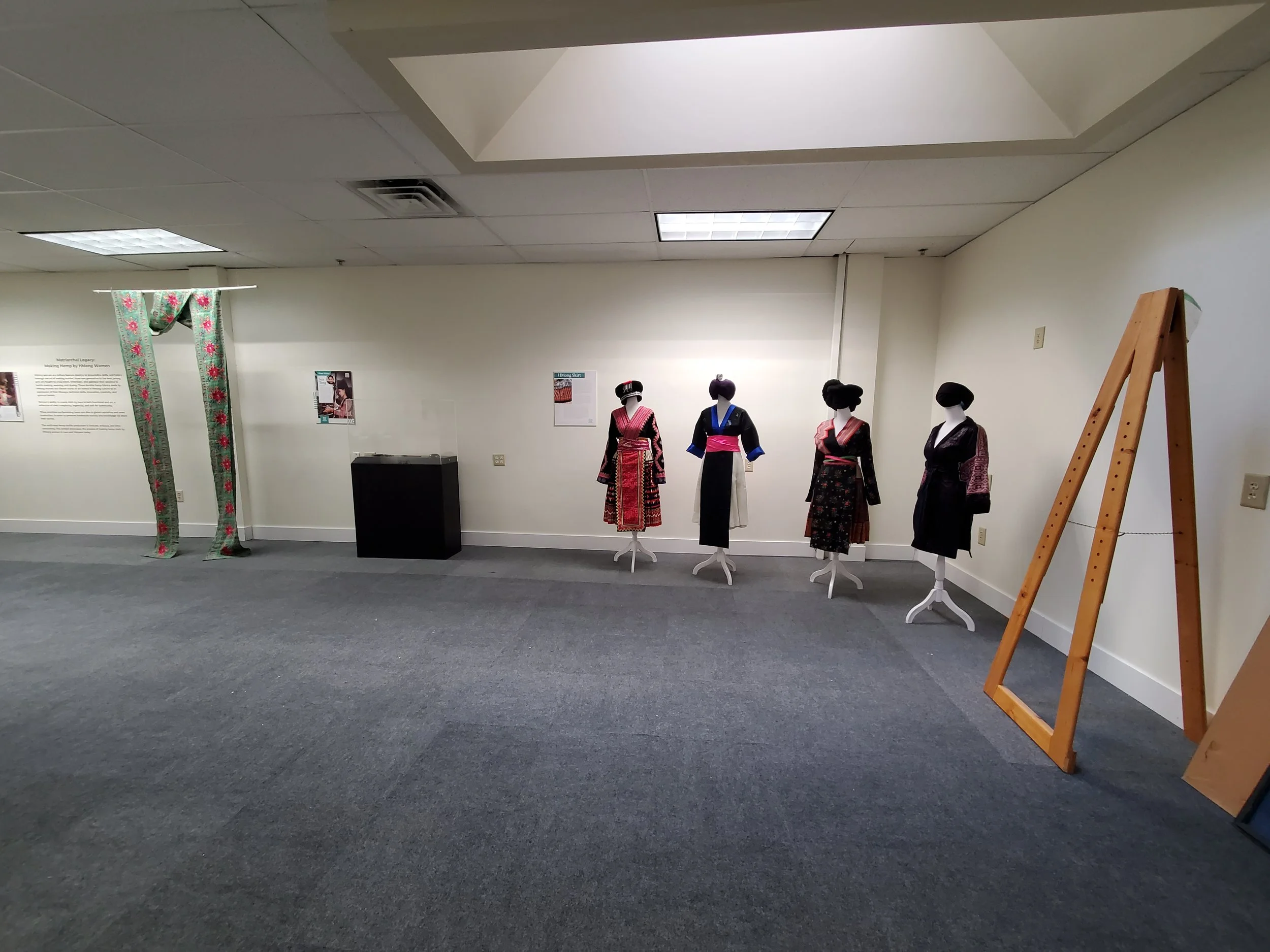
HMong women are culture bearers, passing on knowledge, skills, and history through the art of making textiles. From one generation to the next, girls learn to cross-stitch, embroider, and appliqué before advancing to textile making, weaving, and dyeing. The durable hemp fabrics they create are vibrant works of art, rooted in Hmong culture and expressing their lifeways, technical skills, innovation, creativity, and spiritual beliefs. Created in partnership with RedGreen Rivers, this exhibit showcases the process of making hemp cloth by HMong women in Laos and Vietnam today.
Hemp Textile
The Latin name for hemp, sativa, means useful. Hemp comes from the cannabis sativa plant, one of over 100 cannabinoid varieties. It does not contain Tetrahydrocannabinol (THC), the major psychoactive component recognized in cannabis. Hemp can be used as fuel, cloth, paper, food, rope, sail canvas and many more.
Hemp is widely regarded as the crop for the future because of its low environmental impact and hypoallergenic properties. It can be grown and processed without chemical treatments needed for other plant-derived materials. It yields three times as much raw fiber and six times less water than cotton. Oil made from the seeds to be burned fuel and has fewer emissions than petroleum.
HMong Women and Hemp
In the far reaches of the mountains in Laos, Thailand, Vietnam, and China
The Hmong use hemp to make household items, food, and medicine. It is an important base material in HMong clothing. The clothing become family heirloom that are traditionally passed down to celebrate different life stages from birth to the afterlife.
In funeral rites, women are dressed in a hemp jacket, hemp skirt and hemp leggings. HMong men would be given a long hemp robe. Hemp braided shoes are also worn over cloth slippers. In traditional HMong belief wearing hemp shoes will protect them to safely walk over spiky caterpillar covered mountains or “toj kaab ntswg, dlawm kaab no'' tracing their people’s perilous path over the red and green rivers to reunite with their ancestors.
Making Hemp Fibers
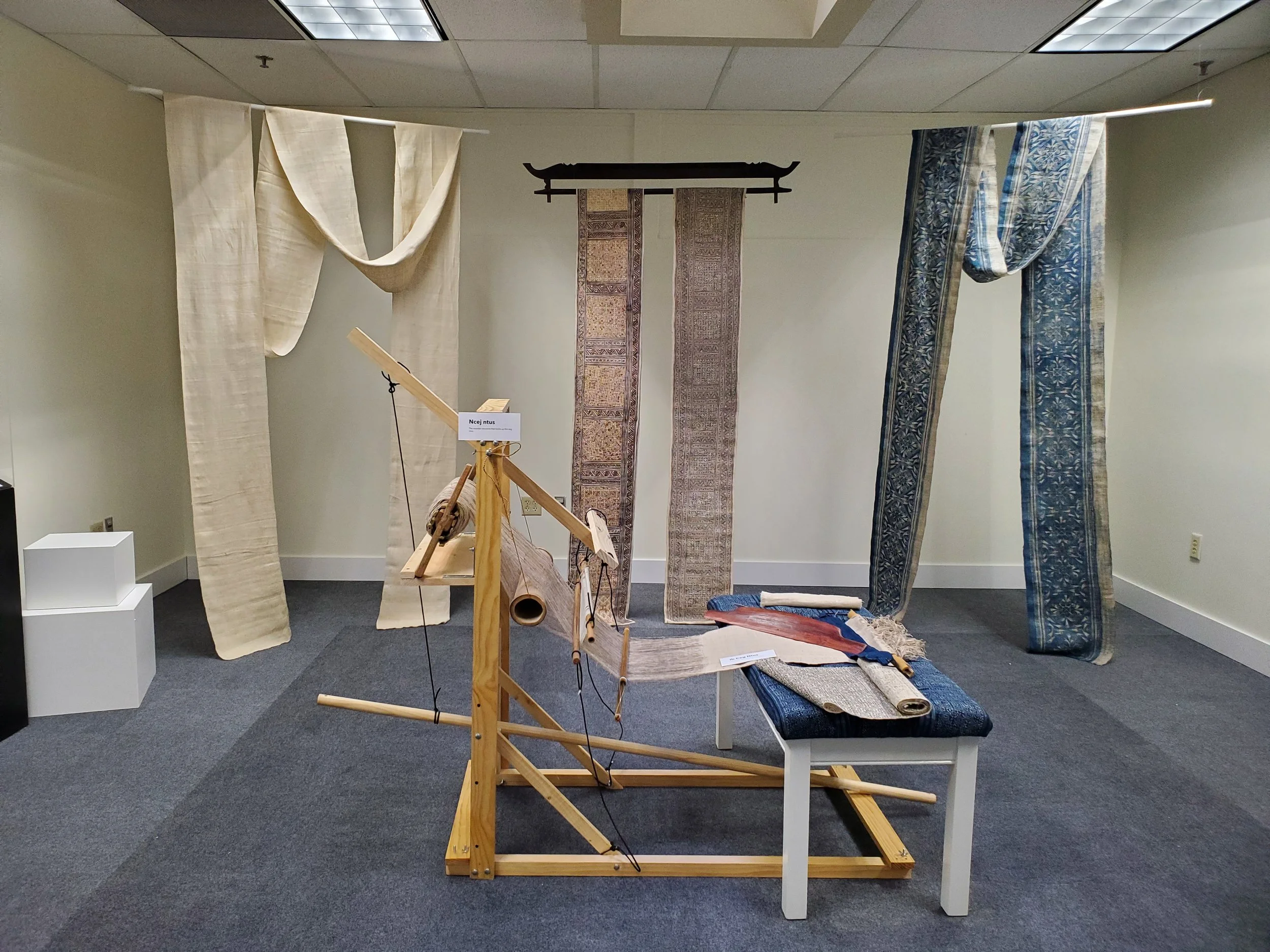
Hemp fibers are created by harvesting the plant when it reaches nearly 10 feet tall then set out to dry. Long strands of bark are thinly peeled from the stem. Across Asia, HMong women are seen with hemp fibers wound around their hands, constantly connecting the separate bark fibers to make a single long thread. It is pounded then boiled in an ash bath, spun numerous times before it can be threaded through a waist strap loom. Processing HMong hemp is all done by hand over the course of a year, making it extremely labor-intensive.
The final product is a durable cloth, similar to linen, and can last generations.